Entradas destacadas
0

II Congreso Mundial de Trabajo Psicosocial en Desaparición Forzada

Con la participación de representantes de más de 27 países, gran parte son organizaciones de víctimas de desaparición forzada y organizaciones que acompañan estos proceso de búsqueda, tendrá lugar el...

Con la participación de representantes de más de 27 países, gran parte son organizaciones de víctimas de desaparición forzada y organizaciones que acompañan estos proceso de búsqueda, tendrá lugar el II  Congreso Mundial de Trabajo Psicosocial en Desaparición Forzada y procesos de exhumación, justicia y verdad.

El II Congreso tiene como objetivo fortalecer a las asociaciones de familiares de los desaparecidos y establecer las normas mínimas para el trabajo de acompañamiento psicosocial en el proceso de búsquedas de los desaparecidos.

En el marco del Congreso se presentara  “La chalina de la esperanza”, proyecto artístico-terapéutico impulsado por la artista grafica Marina García Burgos y la periodista Paola Ugaz, este proyecto está siendo apoyado por el EPAF.

Se viene trabajando con mujeres que han sido victimas de la violencia o son familiares de desaparecidos, ellas tejen, entre todas, una gran bufanda. Buscan abrigo a su soledad frente a un estado indiferente con un método de comunicación ancestral en el poblador andino, el tejido.

Se ha creado un formato (parecido a una pagina A4) y cada señora-tejedora tiene libertad absoluta de crear en ese pedacito un espacio de memoria. Escoge el color y la técnica que quiera y, en muchos casos, incluyen frases, nombres o fotos de su familiar desaparecido. Las señoras se reunían para tejer en la Oficina para Personas Desaparecidos –OPD (Ayacucho).

Hasta la fecha han participado 20 agrupaciones entre barrios asociaciones (Asociación Nacional de Familiares Detenidos, Secuestrados y Desaparecidos del Perú – Anfasep, Vaso de Leche, etc.) y barrios de dos Provincias de Ayacucho: Huamanga y Huanta.

Para mayor  información sobre el II Congreso los invitamos a visitar las siguientes páginas web:

Página del evento: www.congresoexhumaciones.com.

Artículo en el periódico, El Espectador: http://www.elespectador.com/articulo199370-expertos-de-27-paises-discuten-normas-procesos-de-exhumacion

Artículo de Telesur: http://www.telesurtv.net/noticias/secciones/nota/70585-NN/analizan-en-colombia-tema-de-las-desapariciones-forzadas/

0

EPAF’s Forensic Training Workshops in Nepal

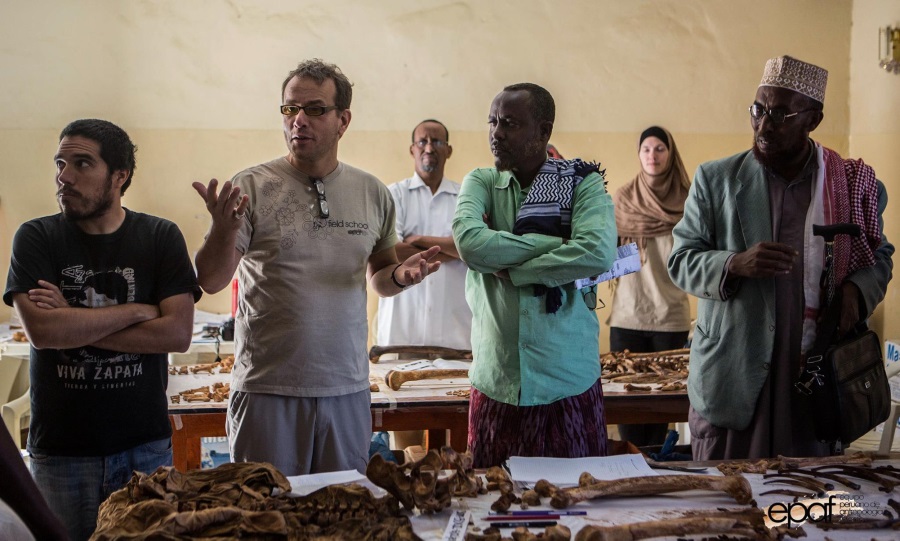
EPAF’s Forensic Training Workshops in Nepal Kathmandu, Nepal – The Peruvian Forensic Anthropology Team (EPAF) recently finished training Nepal’s National Human Rights Commission (NHRC), Advocacy Forum – Nepal, and the...

EPAF’s Forensic Training Workshops in Nepal

Kathmandu, Nepal – The Peruvian Forensic Anthropology Team (EPAF) recently finished training Nepal’s National Human Rights Commission (NHRC), Advocacy Forum – Nepal, and the National Police on how to conduct effective forensic investigations into cases of forced disappearance from the country’s internal armed conflict.

From March 18 to April 15, 78 representatives from those institutions participated in four training workshops in Kathmandu, Pokhara, and Dhangadhi. Through the 4-day workshops, EPAF and its Nepali counterparts were able to share valuable experiences from working in post-conflict societies under similar conditions.

“In many ways, Nepal is exactly where Peru was right before the creation of the Truth and Reconciliation Commission,” reported Marcela Lumbreras, one of EPAF’s forensic trainers in Nepal. “As a result, we think our experience can be very important as they go through this transitional process.”

The training program included a combination of both classroom and field-based exercises to give the trainees hands-on experience in conducting forensic investigations that can help to collect evidence on the crimes committed during the conflict, identify the victims, and hold the perpetrators accountable.

The training program was organized in coordination with the American Bar Association’s Rule of Law Initiative in Nepal under financing from the U.S. State Department’s Bureau of Democracy, Human Rights, and Labor.

0

Ambo and the Missing in Peru

The Peruvian Forensic Anthropology Team (EPAF) expresses its solidarity to the victims of Ambo, Huánuco Province, who, last Thursday April 1st, lost family members in the mudslides and to those...

The Peruvian Forensic Anthropology Team (EPAF) expresses its solidarity to the victims of Ambo, Huánuco Province, who, last Thursday April 1st, lost family members in the mudslides and to those who have not yet been able to determine the whereabouts of their loved ones. The latter are generally referred to as “the missing” because it is not known whether or not they are dead or alive and their families suffer the anguish of not knowing what happened to them. Coupled to this natural disaster is an equally important problem, which is that the official figures refer to 40 mortal victims while local inhabitants estimate that there may be between 200 and 300.

As underlined by the media when commenting the events at Ambo, it is a fact that for the families of the victims who have suffered a traumatic situation such as this one, being able to bury their loved ones in a dignified manner can be a means to recover a certain serenity.

The tragedy of Ambo calls for a reflection on another equally important and present tragedy: the fact that in Peru there could be over 14,000 missing persons. They did not disappear as a consequence of a natural disaster but in the hands of State agents or subversive groups during the internal armed conflict (1980-2000). Like in Ambo, we do not have, as of yet, a final number of victims, which makes it very difficult to determine the search strategy to be implemented.

The families of those thousands of missing persons, just as the families from Ambo, many of which-as a matter of fact-are from the Huánuco Province, have been waiting for the last 27 years to know what happened to their loved ones and, in the cases when their family members are proven to be dead, for the return of their remains in order to give them dignified burials.

The Peruvian Forensic Anthropology Team (EPAF) will continue fighting for a country that warrants the Right to Know to all those who lost their loved ones in natural disasters or as part of the internal conflict. For Peru not to be a country of clandestine cemeteries and for its citizens not to live without knowing what happened to their children, mothers and brothers since that lack of knowledge, that anguishing darkness, is also a way of dying.

Page 19 of 27« First...101718192021...Last »